
How to Choose a Coworking Space for Teams in Bangalore: A Practical Checklist
 Vesta Editorial Team
Introduction: How Do You Choose the Right Coworking Space for Your Team?
Choosing a coworking space for teams involves more than finding desks and Wi-Fi. Businesses should evaluate location, employee commute, privacy, meeting rooms, internet reliability, monthly costs and the flexibility to expand. For companies looking for Team Office Space Bangalore, the right workspace should support daily productivity, professional meetings and future business growth without adding unnecessary operational complexity.
A well-planned workspace can help startups establish a professional presence, growing businesses accommodate new employees and distributed teams collaborate more effectively. However, the best option depends on how your team works, how often employees visit the office and what your business can comfortably afford.
Bangalore's business environment makes this decision particularly important. Technology companies, startups, consulting firms and growing service businesses operate across multiple commercial corridors, including Whitefield, Outer Ring Road, HSR Layout, JP Nagar and other business districts.
This practical checklist explains how to evaluate a coworking space, compare available facilities and identify a workspace that fits your team's current needs and future plans.

1. Why Should Teams Consider Coworking Spaces?
A coworking space gives businesses access to a professional working environment without necessarily requiring them to lease, furnish and operate a traditional office independently.
For growing teams, this arrangement can reduce setup responsibilities and provide access to shared facilities, meeting rooms and managed office services.
The main benefits include:
- Faster setup: Move into a furnished workspace instead of coordinating every aspect of office setup.
- Flexible capacity: Choose an arrangement suited to your current team size and explore expansion options.
- Professional environment: Conduct interviews, client presentations and internal meetings in a dedicated business setting.
- Shared amenities: Access facilities such as meeting rooms, common areas, internet and reception services, depending on the provider and membership.
- Operational convenience: Reduce the time spent coordinating routine office maintenance and facilities.
What does current market demand tell us?
India's flexible office sector is increasingly becoming part of mainstream corporate real estate planning. According to Cushman & Wakefield's report published on 27 August 2026, flexible workspace operators leased 191,306 seats across India's top eight cities during the first half of 2026, an increase of 68.4% year over year. Bengaluru accounted for 57,487 seats, representing approximately 30% of the total. Source: Cushman & Wakefield's India flex workspace report.
These figures indicate strong demand for flexible office arrangements. They do not mean every coworking space is suitable for every business, making careful evaluation essential.
2. What Type of Coworking Space Is Right for Your Team?
Before comparing providers, identify the workspace format that matches your team's daily activities.
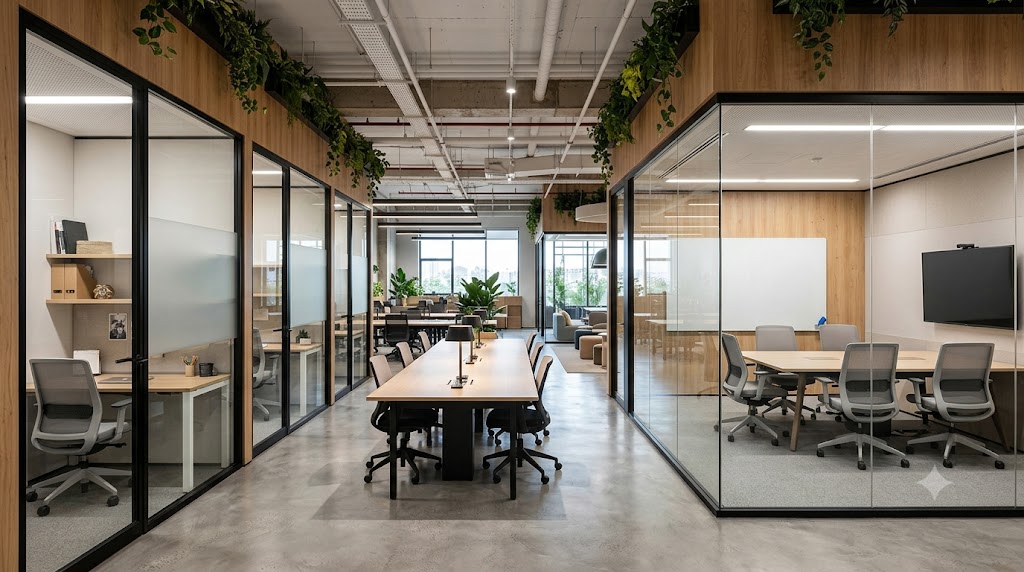
| Workspace Type | Best Suited For | What to Evaluate |
|---|---|---|
| Hot desks | Employees visiting occasionally | Availability, access rules and peak-hour crowding |
| Dedicated desks | Individuals who need a regular workstation | Desk allocation and storage |
| Private Cabins | Teams requiring dedicated, enclosed work areas | Capacity, privacy and meeting access |
| Managed office space | Businesses seeking a more customised office setup | Branding, services and contract terms |
| Meeting rooms | Interviews, workshops and client discussions | Booking rules, equipment and charges |
| Virtual offices | Businesses needing an eligible professional business address | Permitted uses and included services |
For a team that collaborates daily, a private cabin or dedicated team office may be more practical than relying entirely on shared desks.
A hybrid team that visits the office on selected days might benefit from a combination of flexible desks and bookable meeting rooms.
The objective is not to select the largest office. The goal is to select a workspace that aligns with your team’s operational needs and working style.
3. How Important Is Location When Choosing Team Office Space in Bangalore?
Location can influence employee attendance, recruitment, client access and the amount of time people spend commuting.

When searching for Team Office Space Bangalore, begin by identifying where your employees live, where your clients are located and which areas are practical for regular travel.
Consider these factors:
- Employee commute: Estimate travel time for employees travelling from different parts of the city.
- Public transport: Check access to metro stations, bus routes and other transport options.
- Client accessibility: Consider whether customers, vendors and business partners can reach the office conveniently.
- Nearby services: Evaluate access to restaurants, cafés, banking facilities and other everyday essentials.
- Parking: Confirm the availability, cost and rules for two-wheelers and cars.
- Business proximity: Consider whether your team needs to be near technology parks, clients or industry partners.
Which Bangalore locations should businesses compare?
Different areas can suit different operational needs. Evaluate the following as potential search areas rather than assuming one location is ideal for every team:
- Whitefield: Worth evaluating for teams working with businesses in East Bengaluru's technology and commercial corridors.
- Outer Ring Road and Bellandur: Relevant for technology-focused teams and businesses serving nearby corporate offices.
- HSR Layout: An area to consider for startups, consulting businesses and growing service companies.
- JP Nagar: May be convenient for teams based in South Bengaluru.
- Central Bengaluru: Can suit companies that regularly meet clients across central business districts.
Bengaluru's traffic conditions also make commute planning an important part of workspace selection. A recent report by The Indian Express, published in October 2026, highlighted concerns about congestion and its economic impact, including challenges around Outer Ring Road. Read the report.
4. Which Amenities Should a Coworking Space for Teams Provide?
Amenities should support work rather than simply make the workspace look attractive.
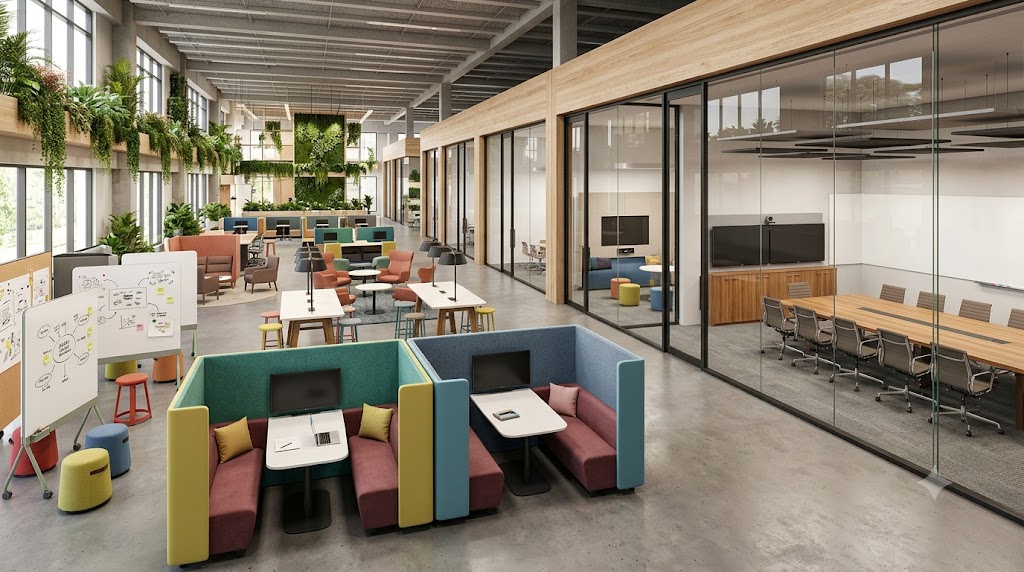
Before booking a coworking space for teams, separate essential facilities from optional benefits:
⚡ Essential Amenities
- Reliable high-speed internet
- Comfortable desks & ergonomic seating
- Consistent power supply & backup generator
- Clean washrooms & common areas
- Access to meeting rooms
- Air conditioning & adequate ventilation
- Secure entry & visitor management
- Drinking water & basic workplace facilities
✨ Useful Additional Amenities
- Phone booths for private calls
- Collaboration and breakout areas
- Printing and scanning facilities
- Pantry or cafeteria access
- Reception & mail-handling services
- Video-conferencing equipment
- Dedicated parking facilities
- Extended access hours, where required
Not every provider includes every facility in its standard membership. Some amenities may require advance reservations or additional payment.
How can you test amenities before committing?
Do not rely only on photographs or a sales presentation. During your visit, test the Wi-Fi, inspect the desks and chairs, check the temperature and noise levels, and ask how technical problems are handled.
If your employees attend video meetings throughout the day, verify whether meeting rooms and quiet spaces are available when needed.
A practical approach is to ask the provider to demonstrate the facilities your team will use most frequently.
5. How Should You Evaluate Private Cabins and Meeting Rooms?
Private Cabins can be valuable for teams that handle confidential information, conduct frequent calls or need a consistent environment for collaboration.
However, the availability of an enclosed office does not automatically guarantee suitable privacy or enough working space.
Evaluate the following before selecting a cabin:
- Capacity: Confirm that the cabin accommodates your current headcount comfortably, with enough room for desks, chairs and movement.
- Acoustic privacy: Check whether conversations from neighbouring offices or shared areas can be heard clearly.
- Ventilation and lighting: Assess airflow, natural light where available and overall comfort during a full working day.
- Connectivity: Verify power sockets, network coverage and access to any required wired internet.
- Storage: Determine whether employees can securely store documents, equipment and personal belongings.
- Meeting access: Ask whether conference rooms are included in the membership or charged separately.
- Expansion options: Check whether a larger cabin or adjacent space might be available if your team grows.
For teams that frequently handle sensitive customer data, also review physical access controls, visitor policies and the company's own information-security requirements.
6. What Should You Check About Internet, Security and Infrastructure?
A visually appealing office cannot compensate for unreliable infrastructure. Before signing an agreement, assess the facilities that directly affect business continuity:

- Internet reliability: Ask about internet speeds, network capacity, backup connectivity and the process for reporting outages. If your team relies on cloud applications, remote servers or frequent video conferences, test these activities during your site visit.
- Power backup: Clarify which facilities receive backup power and what happens during a prolonged outage. Ask whether workstations, networking equipment, lifts and air conditioning are covered.
- Physical security: Review entry permissions, visitor registration, CCTV coverage in common areas and the availability of secure storage. Confirm how access cards or keys are managed when employees leave the company.
- Data privacy: Ask whether members share a network and what safeguards are available. Businesses with strict security requirements should evaluate their own VPN, device-management and network-security policies rather than assuming a coworking provider satisfies every compliance obligation.
- Operational support: Find out who handles internet failures, maintenance requests, cleaning issues and access problems. Ask about response times and escalation procedures.
7. How Do You Compare Coworking Space Pricing and Hidden Costs?
The lowest advertised price is not always the lowest-cost option for your team. Compare providers using the total expected monthly expense, including compulsory charges and facilities your employees will actually use.
Your cost calculation should include:
- Base membership or office rental fees
- Applicable taxes
- Security deposit and refund conditions
- Meeting-room booking charges
- Additional internet or IT services, if applicable
- Parking fees
- Printing and administrative charges
- Overtime or extended-access fees
- Charges for additional seats
- Moving, branding or setup costs, where applicable
Example: Compare the full monthly cost
The following is an illustrative calculation, not a quotation from any coworking provider:
| Cost Component | Option A | Option B |
|---|---|---|
| Monthly workspace fee | ₹60,000 | ₹68,000 |
| Meeting-room usage | ₹6,000 | ₹2,000 |
| Parking and other charges | ₹4,000 | ₹2,000 |
| Total monthly cost before taxes | ₹70,000 | ₹72,000 |
Option A has a lower base price, but Option B may offer greater predictability if its meeting-room package better matches the team's requirements.
The example demonstrates why businesses should compare the complete cost structure instead of choosing solely by advertised rent.
Also ask whether the agreement includes a minimum commitment period, a price-escalation clause, notice requirements and penalties for early termination.
8. Can a Flexible Workspace Support Business Growth?
A Flexible Workspace can help businesses respond to changing headcounts, project requirements and working arrangements.

Instead of selecting an office solely for today's needs, evaluate how easily the arrangement can adapt over the next six to twelve months.
Ask potential providers:
- Can we add seats when new employees join?
- Can we reduce capacity if a project ends?
- Are larger cabins or alternative office formats available?
- Can employees use meeting rooms at other locations, if offered?
- What happens when the current agreement expires?
- Are additional seats subject to availability or revised pricing?
However, flexibility must be confirmed in the contract. A provider cannot guarantee future availability unless the relevant terms support it. The best choice balances immediate affordability with a realistic path for expansion.
9. How Should You Assess Employee Comfort and Productivity?
An office should support the people using it every day. Before finalising a coworking space, consider the following employee-experience factors:
- Noise: Are employees able to concentrate and participate in calls?
- Ergonomics: Are desks and chairs comfortable for prolonged use?
- Lighting: Is the workspace adequately lit throughout the day?
- Temperature: Is the air conditioning comfortable and consistently managed?
- Break areas: Can employees take breaks without disturbing colleagues?
- Accessibility: Can team members access the building and facilities they need?
- Community: Does the environment suit your team's preference for interaction or quiet work?
- Working hours: Can employees access the space when their schedules require it?
If possible, arrange a trial day or a short-term booking before making a longer commitment. A useful test is to simulate a normal working day: attend a video call, work on a demanding task, use the meeting facilities and evaluate the commute. Employee feedback from this exercise can reveal issues that a brief office tour may not uncover.
10. What Questions Should You Ask Before Signing a Coworking Agreement?
Request clear written answers to the following questions:
Commercial terms
- What is the total monthly fee, including applicable charges?
- How much is the security deposit, and when is it refundable?
- What is the minimum commitment period?
- What are the notice period and early-exit conditions?
Workspace and facilities
- Are the desks or cabin exclusively allocated to our team?
- Which amenities are included in the quoted price?
- Are meeting rooms charged separately?
- Can we access the premises outside standard business hours?
Operations and security
- What internet and power-backup arrangements are available?
- Who handles technical issues and maintenance?
- How are visitors registered and access permissions controlled?
- What privacy and network-security measures are provided?
Growth and administration
- Can we add seats or upgrade our cabin?
- Is expansion subject to availability?
- Can we display our company name or branding?
- What business-address or mail-handling services are included, if any?
Read the agreement carefully and ensure all important promises are documented. If your company has legal, compliance or information-security requirements, obtain the appropriate internal review before signing.
11. Practical Checklist for Choosing a Coworking Space
Use this checklist when comparing shortlisted workspaces:
- The location is convenient for employees and clients.
- The office fits the current team size.
- Private Cabins or dedicated desks meet daily work requirements.
- Meeting rooms are available when needed.
- Internet and power-backup arrangements have been checked.
- Security, visitor management and privacy requirements are addressed.
- The workspace is comfortable, clean and adequately maintained.
- Parking and transport options suit the team.
- All recurring and additional costs are documented.
- Ensure the deposit, notice period and exit conditions are clearly defined and documented.
- Confirm that the provider has clearly explained the available options for adding seats or upgrading.
- The team has visited the space and evaluated its suitability.
Score each shortlisted option against these requirements. Give greater weight to essentials such as location, reliable infrastructure, privacy and budget than to optional amenities. A simple comparison sheet can help decision-makers explain why one workspace offers a better fit than another.
12. Why Consider Vesta Workspaces for Your Team Office Space in Bangalore?
Finding the right coworking space for teams requires balancing convenience, functionality, cost and future growth.
Vesta Workspaces provides a starting point for businesses exploring coworking and flexible office solutions in Bangalore. Depending on current availability and the specific plan, businesses can enquire about shared workspaces, Private Cabins, meeting rooms and other office requirements.
When considering Vesta Workspaces, discuss your team's headcount, preferred location, working hours, meeting frequency, and expected expansion to identify the most suitable workspace solution. These details help determine which available arrangement is appropriate for your business.
Before making a commitment, request current pricing, inclusions, availability and contract terms so you can compare the offering against your checklist.
Whether you are establishing a startup office, expanding an existing team or searching for a more adaptable working environment, choosing the right workspace starts with understanding your requirements.
Explore Vesta Workspaces: https://vestaworkspaces.com/
Contact the team to discuss your workspace requirements, enquire about available office options and arrange a visit where available.
Choose a workspace that supports your people today while giving your business room to grow tomorrow.
Frequently Asked Questions
1. How do I choose the best coworking space for teams?
Start by evaluating location, team size, privacy, internet reliability, meeting-room access, amenities, pricing and contract flexibility. Visit the shortlisted centres and compare their total monthly costs thoroughly before making your final decision.
2. What is the difference between a coworking space and a private office?
A coworking space may provide shared desks and common facilities, whereas a private office or cabin offers a dedicated, enclosed area for a team. The best option depends on the need for privacy, collaboration and predictable workspace access.
3. How much does Team Office Space Bangalore cost?
Pricing varies by location, workspace size, amenities, provider and contract duration. Ask for a current quotation that includes taxes, deposits, meeting-room charges, parking and other applicable costs rather than relying on a general market estimate.
4. Are Private Cabins suitable for small teams?
Yes. Private Cabins can suit small teams that need dedicated workstations, regular collaboration and greater privacy. Check the cabin's actual capacity, ventilation, acoustic conditions and included facilities before booking.
5. What amenities should a coworking space provide?
Important amenities include reliable internet, comfortable seating, power backup, clean common areas, meeting rooms, security and operational support. Depending on your work, phone booths, parking, printing and video-conferencing equipment may also be useful.
6. Is a Flexible Workspace suitable for a growing startup?
A Flexible Workspace can be suitable when a startup expects changes in headcount or office requirements. Confirm whether additional seats, larger cabins and revised membership terms are available before signing an agreement.
7. Which Bangalore locations should I consider for a team office?
When selecting a team office, consider locations such as Whitefield, HSR Layout, JP Nagar, Outer Ring Road and central Bengaluru, taking into account employee commutes, client locations, transport connectivity and budget. The ideal location should align with your team's operational requirements and accessibility needs.
8. What should I check before signing a coworking agreement?
Carefully review the total fees, deposit terms, minimum commitment, notice period, access hours, meeting-room charges, security arrangements and expansion options before finalising your decision. Make sure important service commitments are recorded in writing.
9. Can a coworking space support hybrid teams?
Yes. Hybrid teams may use a combination of dedicated workstations, shared desks and meeting rooms. Check attendance patterns, booking rules and desk availability on peak days before selecting a membership.
10. How can I compare two coworking spaces fairly?
Use the same checklist for both options. Compare location, actual capacity, privacy, infrastructure, included amenities, total monthly cost, contract terms and growth potential. A site visit and trial booking can help validate the comparison.