
How to Choose a Coworking Space for Teams: A Practical Checklist
 Vesta Editorial Team
Choosing the right coworking space for teams is an important business decision. The right workspace can support collaboration, improve employee experience, simplify office management and help a company scale without committing to a large traditional office lease.

For startups, growing businesses and established companies, the decision involves more than finding desks and internet access. Businesses must evaluate location, team size, private cabins, meeting rooms, technology, monthly costs, security and the flexibility to expand.
For companies looking for team office space in Bangalore, a practical evaluation checklist can make the process easier and help avoid unexpected costs.
At Vesta Workspaces, businesses can explore flexible workspace options, including coworking spaces, private cabins, shared offices, virtual offices and meeting rooms to find a setup that suits their working requirements.
What Should You Look for in a Coworking Space for Teams?
A good coworking space for teams should offer convenient connectivity, comfortable workstations, reliable internet, suitable meeting facilities, privacy, transparent pricing and flexible membership options. The workspace should match the team's size, working style, budget and future growth plans.
Before choosing a provider, compare at least three suitable options, calculate the total monthly cost, inspect the facilities in person and review the membership agreement carefully.
Why Are More Businesses Considering Flexible Workspaces?
The way companies use office space is changing. Businesses increasingly need workplaces that support in-person collaboration while accommodating changing team sizes and hybrid working arrangements.
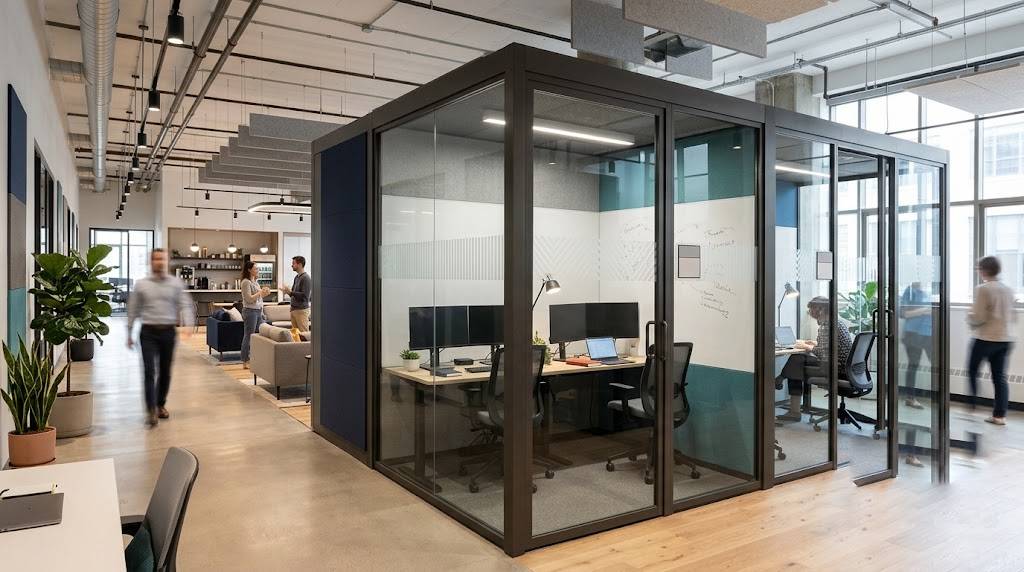
A September 2026 report from CBRE highlighted that workplace quality, company culture and employee experience are becoming important considerations in office design. Its survey found that 67% of occupiers expect flexible workspaces to form part of their office portfolio within the next two years.
This shift makes flexible workspaces worth evaluating for businesses that need professional facilities without independently managing every aspect of an office.
Consider a growing technology startup with eight employees. Initially, a few shared desks may be sufficient. As the team grows to 15 employees, it may need a private cabin, additional workstations and a dedicated meeting area. A flexible workspace can provide a practical way to evaluate these changing requirements without immediately taking on a conventional office lease.
The best option depends on the actual commercial terms, availability and services offered by each provider.
1. Evaluate the Location and Daily Commute
Location should be one of the first factors on your checklist. Even a well-designed office can become inconvenient if employees spend excessive time travelling to work.
For businesses searching for Team Office Space Bangalore, compare locations based on employee commute patterns, public transport access, road connectivity, parking and proximity to everyday amenities.

Before shortlisting a workspace, ask:
- Is the location accessible by metro, bus or major roads?
- Can most team members commute conveniently?
- Are restaurants, cafes, banks and other essential services nearby?
- Is parking available for employees and visitors?
- Is the area suitable for client meetings and business operations?
For example, a team whose employees live across different parts of the city may prefer a centrally accessible location. A business that regularly meets clients may prioritise professional surroundings and convenient visitor access.
2. Choose the Right Workspace Format
Not every team needs the same type of office. The ideal setup depends on the number of employees, the nature of the work and the level of privacy required.
Shared coworking desks
Shared desks can suit freelancers, small teams and businesses that need a professional working environment without a dedicated private office.
They are worth considering when employees primarily need desks, internet access and access to common facilities.
Private cabins
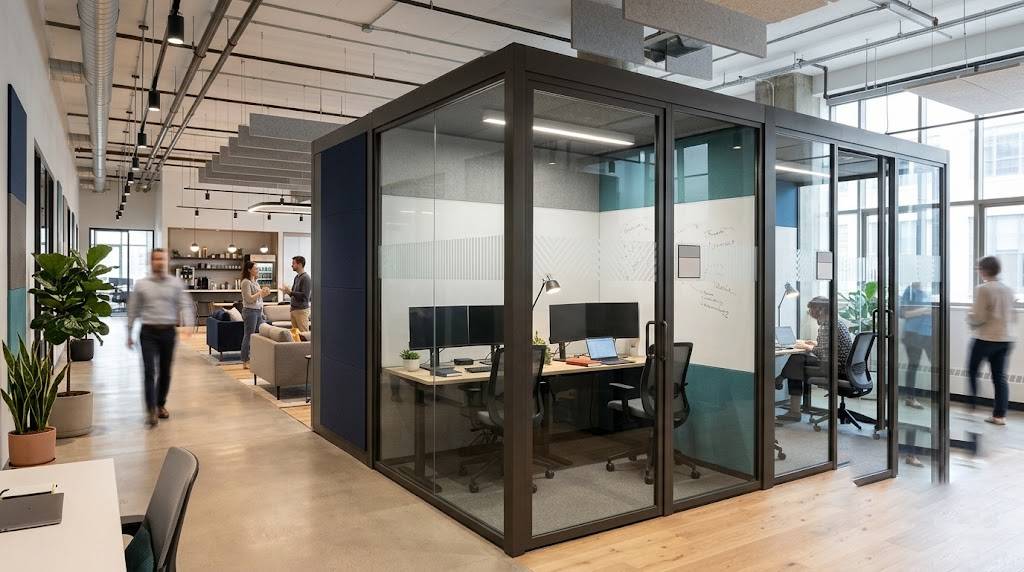
Private cabins offer an enclosed workspace for teams that require greater privacy, regular internal discussions or a dedicated area for daily operations.
They may suit consulting firms, technology startups, sales teams and businesses handling confidential information.
Dedicated team offices
Dedicated team offices provide a defined workspace for businesses that want their employees to sit together and establish a consistent office routine.
Depending on the provider, these offices may include furniture, internet, utilities and access to shared facilities.
Meeting rooms
Meeting rooms are important for interviews, client presentations, team reviews and video conferences. Check whether bookings are included in the membership or charged separately.
Virtual offices
Virtual office services may suit businesses that need an eligible business address or certain administrative facilities without requiring daily physical workstations. Confirm the exact services and applicable compliance requirements with the provider.
Before deciding, identify which facilities your team needs every day and which can be accessed occasionally.
3. Calculate the Total Cost, Not Just the Desk Price
Monthly pricing is a major factor when selecting a coworking space. However, comparing only the advertised per-seat rate can lead to an inaccurate budget.

Prepare a cost comparison covering:
- Monthly membership or office rental charges
- Security deposit and advance payment
- GST and other applicable charges
- Meeting room usage
- Printing and additional services
- Parking and access cards
- Overtime or after-hours access
- Internet, utilities and maintenance charges, where applicable
- Notice period, lock-in and exit conditions
For example, suppose a business needs 10 workstations. Provider A offers a lower headline rate but charges separately for meeting rooms and parking. Provider B has a higher base price but includes the facilities the team uses regularly.
Provider B could offer better overall value, depending on actual usage and contract terms.
Total monthly workspace cost = Membership fees + additional services + applicable taxes and recurring charges.
Also calculate the effective monthly cost per employee by dividing the total recurring workspace cost by the number of employees using the facility.
Request a written quotation from each shortlisted provider. This makes it easier to compare like-for-like offers and avoid budget surprises.
4. Check Internet Reliability and Technology
Reliable internet is essential for teams working with cloud applications, video calls, project management tools, customer relationship management platforms and large files.
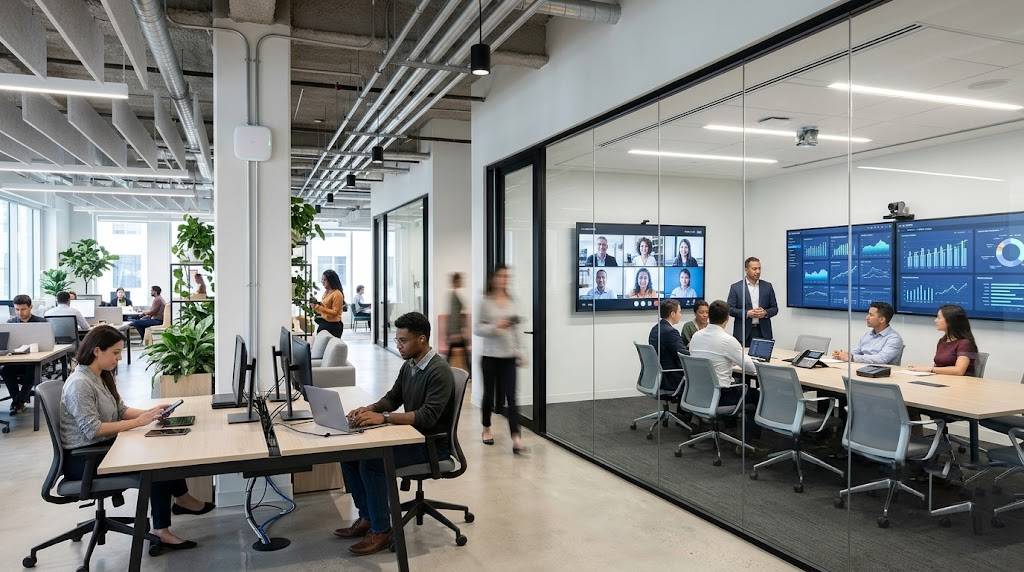
A professional-looking workspace is not enough if employees experience frequent connectivity problems.
During a site visit, check:
- Internet speed and stability
- Wi-Fi coverage throughout the office
- Availability of backup connectivity
- Video conferencing facilities
- Power backup during outages
- Technical support response times
- Access control and network security arrangements
Ask whether the provider offers separate networks or suitable security options for businesses handling sensitive data.
For example, a digital marketing team may regularly attend client calls, access analytics platforms and share large creative files. Consistent connectivity can help reduce interruptions and keep daily workflows running smoothly.
Do not rely only on a speed test performed during a quiet period. Ask about backup systems and how technical problems are handled during normal working hours.
5. Inspect Meeting Rooms and Collaboration Areas
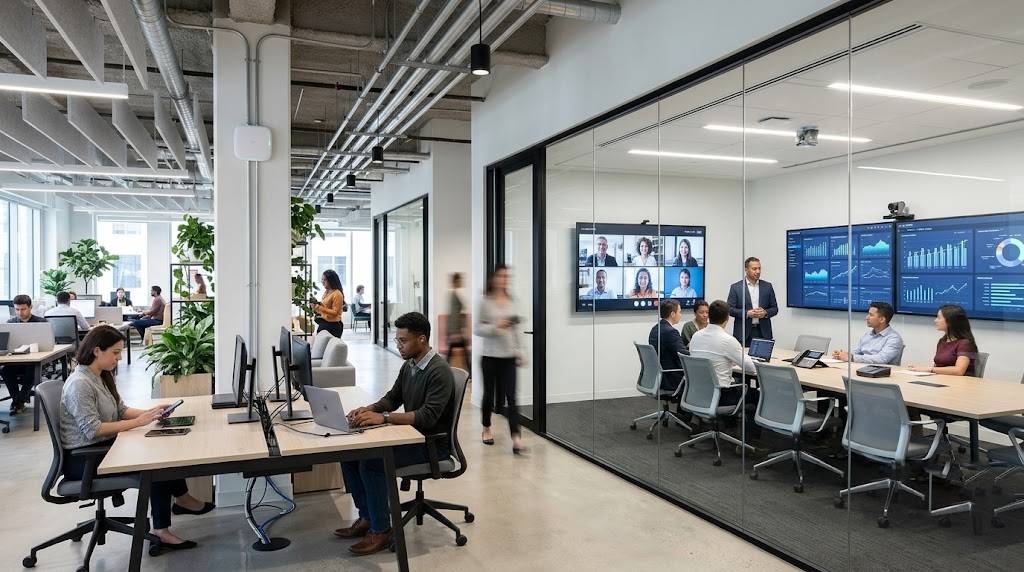
Teams need spaces for focused work as well as discussions. Meeting facilities become particularly important when employees collaborate with clients, conduct interviews or participate in hybrid meetings.
Evaluate the availability and quality of:
- Small meeting rooms
- Larger conference rooms
- Video conferencing equipment
- Presentation screens
- Whiteboards
- Phone booths or quiet spaces
- Informal collaboration areas
Check the booking process and room availability during peak business hours.
Imagine a sales team that conducts six client meetings each week. If meeting rooms are frequently unavailable or require expensive additional bookings, the workspace may not suit its operating requirements.
Ask the provider whether meeting room hours are included in the membership and whether unused hours can be carried forward.
6. Prioritise Privacy, Security and Confidentiality
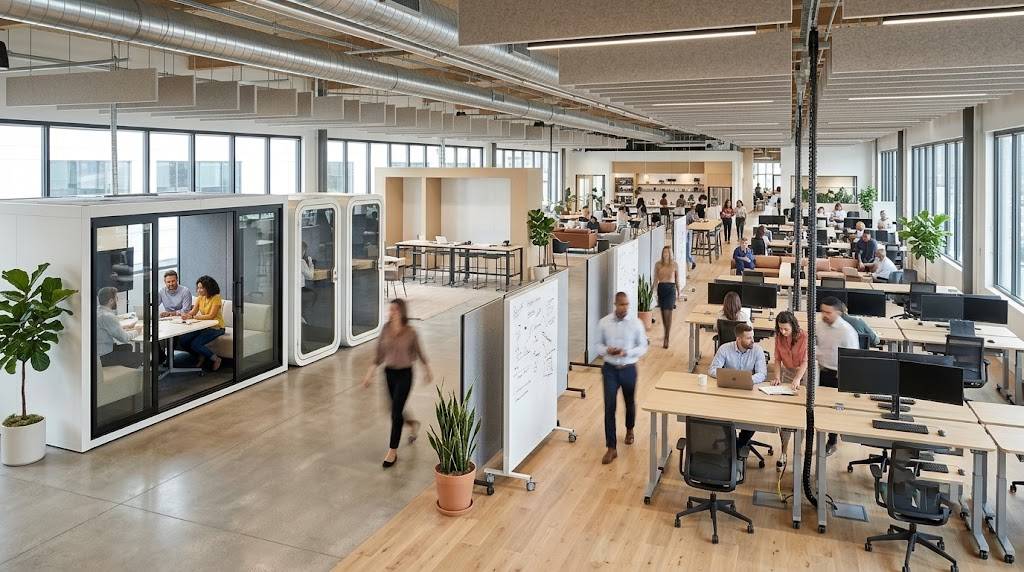
A shared office environment requires appropriate arrangements for protecting company information.
Before signing an agreement, understand how the workspace manages visitor access, office entry, network access and physical security.
Your checklist should include:
- Secure entry and access cards
- Visitor registration procedures
- Lockable storage, where available
- Private spaces for confidential discussions
- Clear rules for handling access credentials
- Suitable network security practices
- Document disposal and data confidentiality procedures
Businesses in finance, consulting, recruitment and technology may have additional confidentiality requirements. They should confirm that the proposed workspace can support their internal policies and contractual obligations.
For teams handling sensitive client information, a private cabin may be more suitable than an open shared desk arrangement.
Do not assume that a private cabin automatically provides complete network or information security. Confirm the actual safeguards and responsibilities with the workspace provider.
7. Assess Comfort, Amenities and Employee Experience
The physical environment influences how employees experience their working day. Seating, lighting, ventilation, cleanliness and noise levels should all be considered during a workspace tour.
Inspect the following facilities:
- Ergonomic chairs and functional desks
- Adequate lighting and ventilation
- Air conditioning
- Clean restrooms
- Pantry or refreshment facilities
- Drinking water
- Breakout areas
- Housekeeping and maintenance
- Accessibility provisions
- Emergency exits and fire safety arrangements
Where possible, visit during normal working hours rather than relying exclusively on photographs.
Observe whether the environment is noisy, whether desks feel comfortable and whether shared areas are well maintained.
A team spending eight hours a day in the office will generally benefit more from a comfortable, functional environment than from decorative features that are rarely used.
8. Confirm Membership Flexibility and Expansion Options
One of the main advantages of a flexible workspace is the ability to adapt as business requirements change. However, the degree of flexibility differs between providers and membership plans.
Ask these questions before committing:
- Can the team increase or decrease its workstation count?
- Are larger cabins available if the company grows?
- Can membership plans be changed?
- What is the minimum commitment period?
- What notice period applies?
- Are there relocation options within the same provider's network?
What happens if a business needs to terminate the agreement early?
Consider a startup that expects to grow from 10 employees to 20 within six months. It should confirm whether additional seats or a larger private office can realistically be made available.
Avoid assuming that future capacity is guaranteed. Obtain written confirmation of the expansion terms and any related pricing changes.
9. Review the Provider's Services and Support
A workspace provider can make daily office operations easier by managing facilities, maintenance and shared services.
However, service quality matters as much as the list of amenities.
During the evaluation process, ask about:
- Front-desk and visitor support
- Maintenance response times
- Internet troubleshooting
- Housekeeping schedules
- Billing and account management
- Access outside standard office hours
- Meeting room booking support
- Escalation procedures for unresolved issues
If possible, speak with existing members about their experiences. Ask whether maintenance requests are handled promptly and whether the provider communicates changes clearly.
A workspace that responds efficiently to operational issues can reduce the administrative burden on founders, HR teams and office managers.
10. Compare Contracts Before Making a Decision
Never select a coworking space based solely on a sales presentation or promotional offer. Read the agreement and clarify the terms that affect your budget, access and business continuity.
Pay particular attention to:
- Services included in the membership
- Deposit amount and refund conditions
- Billing cycle and payment deadlines
- Contract duration and lock-in period
- Renewal and price revision clauses
- Notice and termination requirements
- Rules for guests and visitors
- Liability, damage and access provisions
- Restrictions on business activities or signage
Ask for clarification whenever a clause is unclear. For larger teams, legal or procurement review may be appropriate before signing.
A clear agreement helps both parties understand their responsibilities and reduces the risk of unexpected disputes.
11. Visit the Workspace Before Booking
Online photographs and virtual tours can help you shortlist properties, but a physical visit provides a better understanding of the actual working environment.
Schedule a tour and assess the workspace against a consistent checklist.
During the visit:
- Test internet connectivity and check mobile reception.
- Inspect desks, chairs, meeting rooms and shared facilities.
- Observe noise levels during working hours.
- Ask about current availability for your required team size.
- Review pricing, inclusions and additional charges.
- Clarify membership terms and expansion options.
- Check access, security and maintenance arrangements.
- Ask for a written quotation and membership agreement.
If possible, arrange a trial day or short-term booking before making a longer commitment.
Visit https://vestaworkspaces.com/ to learn more.
Practical Coworking Space Checklist for Teams
Use this checklist when evaluating different workspace providers:
- Convenient location and employee commute
- Suitable desks, private cabins or dedicated offices
- Adequate capacity for the current team
- Reliable internet and power backup
- Meeting rooms and video conferencing facilities
- Appropriate privacy and security measures
- Comfortable seating and well-maintained amenities
- Transparent pricing and a complete cost breakdown
- Flexible membership and expansion options
- Clear deposit, lock-in and exit terms
- Responsive facility management
- Positive feedback from existing members
- Physical site visit completed
- Written quotation and agreement reviewed
Compare shortlisted options against these requirements rather than choosing based on price or appearance alone.
Frequently Asked Questions
1. How do I choose the best coworking space for teams?
Start by assessing location, team size, budget, privacy, internet reliability, meeting rooms and membership flexibility. Visit shortlisted workspaces, calculate the complete monthly cost and review the contract before making a decision.
2. Is a private cabin better than shared coworking space?
A private cabin may be better for teams that need confidentiality, dedicated seating and fewer distractions. Shared coworking desks can be suitable for smaller teams that prioritise flexibility and access to common facilities. The right choice depends on your working style and budget.
3. What should businesses consider when choosing team office space in Bangalore?
Businesses should assess commute times, public transport connectivity, parking availability, total monthly costs, internet reliability, meeting facilities and available expansion options. The preferred location should be practical for employees and accessible to clients when required.
4. Is a flexible workspace suitable for a growing startup?
Yes, a flexible workspace can suit a growing startup if the provider offers appropriate membership terms, suitable facilities and the ability to add workstations. Confirm availability, expansion conditions and pricing before relying on future capacity.
5. What amenities should a coworking space for teams include?
Important amenities may include reliable internet, comfortable workstations, meeting rooms, power backup, housekeeping, restrooms, pantry facilities and secure access. Additional requirements depend on the team's daily operations.
6. How much does coworking space for teams cost?
The cost depends on location, team size, workspace type, membership duration and included services. Private cabins and dedicated offices may have different pricing from shared desks. Request an itemised quotation to compare the total monthly cost accurately.
7. Can a team book a coworking space for a short period?
Some providers offer daily, weekly or monthly options, while others require longer commitments. Confirm the minimum booking period, availability, access conditions and pricing directly with the provider.
8. Why should a business schedule a workspace tour?
A workspace tour allows businesses to inspect facilities, test connectivity, assess noise levels, understand the office environment and clarify pricing. It also helps confirm whether the workspace suits the team's requirements before signing an agreement.
Conclusion: Choose a Workspace That Supports Your Team's Growth
Choosing the right coworking space for teams requires a balanced assessment of location, facilities, privacy, costs and flexibility. A workspace should support everyday productivity while accommodating the company's changing needs.

For businesses looking for Team Office Space Bangalore, comparing providers through a structured checklist can make the decision more practical and transparent.
Vesta Workspaces offers workspace options for businesses exploring coworking spaces, private cabins, shared offices, virtual offices and meeting rooms. Review the available options, discuss your team's requirements and arrange a workspace tour to assess the facilities in person.
Ready to find your team's next workspace?
Visit https://vestaworkspaces.com/ and contact Vesta Workspaces to enquire about available options and schedule a tour.