
Coworking Space vs Traditional Office: Which Is Better for Bangalore Businesses?
 Vesta Editorial Team
Bangalore is one of India’s most active business and startup hubs, with companies ranging from early-stage startups and freelancers to established technology, consulting, finance and professional-service businesses. As companies grow, one important decision often comes up: Should you choose a coworking space or a traditional office?
The answer depends on your business size, budget, growth plans, team structure and preferred working environment.
A coworking space offers flexibility, shared amenities and scalable workspace options, while a traditional office provides greater control over the premises, branding and office configuration. For businesses operating in Bangalore, comparing these two models carefully can help identify the workspace solution that matches their current requirements.
If you are searching for a Flexible Office Bangalore businesses can use without taking on unnecessary long-term commitments, understanding the differences between these workspace models is an important first step.
What Is a Coworking Space?
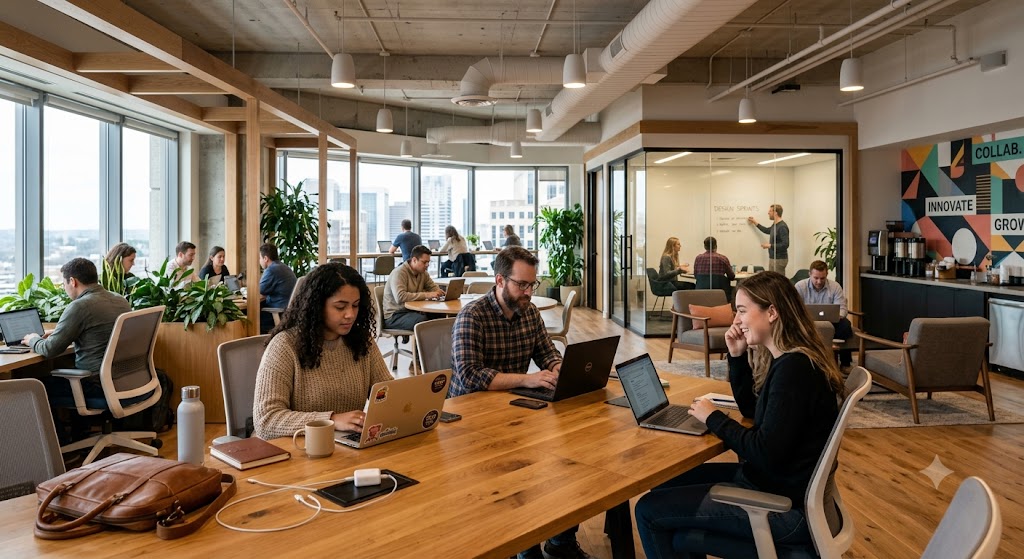
A coworking space is a professionally managed workspace where individuals, startups, small businesses and established companies can work within a shared office environment.
Depending on the workspace provider, businesses may have access to dedicated desks, private cabins, meeting rooms, conference facilities, reception services, internet connectivity and other office amenities.
One of the biggest advantages is flexibility. A company can often select a workspace based on its current team size and expand or reduce its requirement as the business changes.
For a startup or growing company in Bangalore, this can make coworking an alternative to immediately leasing and setting up a complete office.
What Is a Traditional Office?
A traditional office generally involves leasing or renting a dedicated commercial property for a specific business.
The company is responsible for setting up the workspace according to its requirements. This can include furniture, interiors, networking infrastructure, security arrangements, utilities, maintenance and other operational requirements.
A traditional office provides greater control over the physical environment. Businesses can create their own layout, branding and workplace culture without sharing the premises with other companies.
However, the initial investment and ongoing responsibilities can be higher, particularly for smaller businesses.
Coworking Space vs Traditional Office: Key Differences
When comparing a Coworking Space vs Traditional Office, businesses should consider more than just monthly rent.
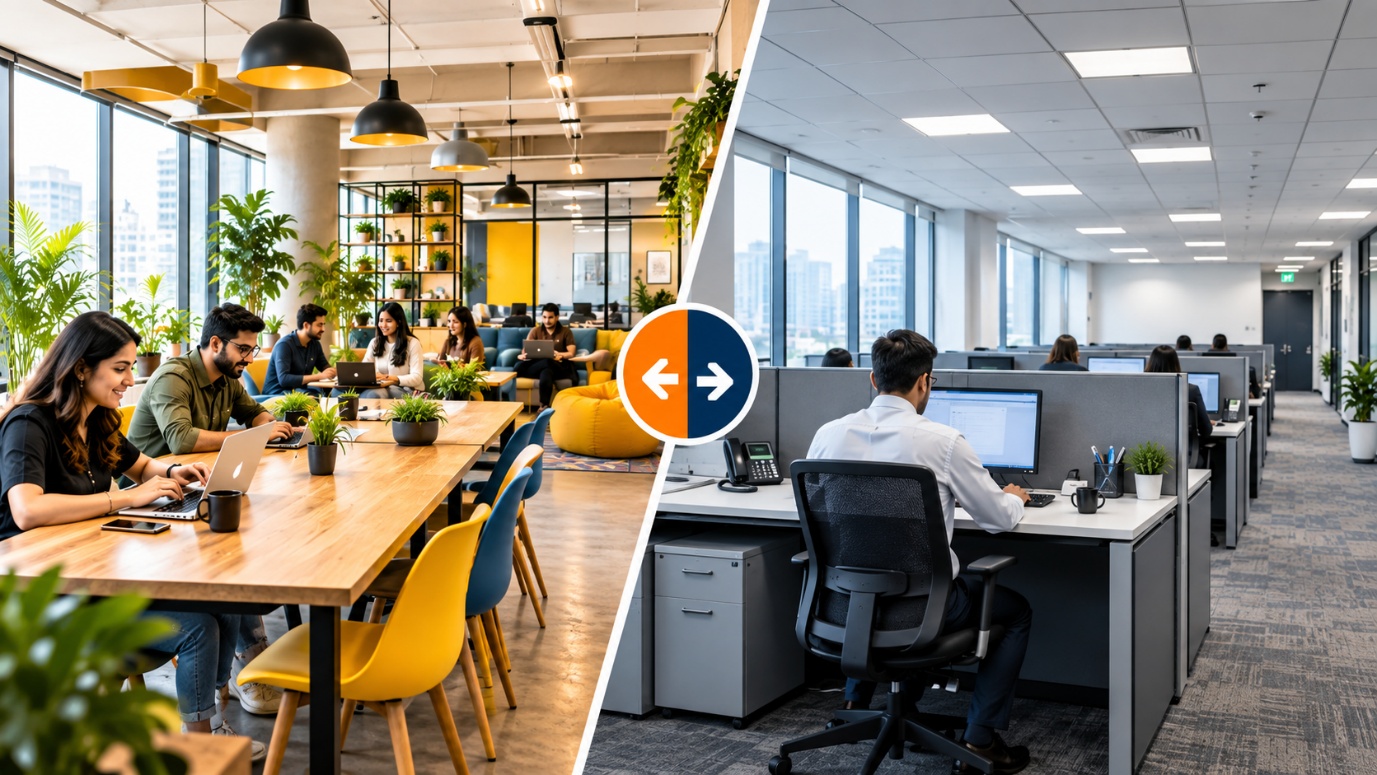
Here are some of the major differences.
1. Flexibility
Flexibility is one of the biggest differences between the two models.
Coworking spaces are generally designed to accommodate different business requirements. A startup may begin with a small number of seats and increase its workspace requirement as the team expands.
A traditional office is usually based on a fixed commercial lease and predetermined space. If the business grows significantly, it may eventually need to relocate or lease additional space.
For businesses experiencing rapid changes in team size, a flexible workspace can therefore provide greater operational adaptability.
2. Initial Investment
Setting up a traditional office can involve several expenses beyond the property lease.
Businesses may need to budget for:
- Office furniture
- Interior design
- Internet and networking
- Electrical requirements
- Security
- Meeting-room setup
- Reception facilities
- Maintenance
- Office equipment
With a managed coworking environment, many of these facilities are already available.
This can allow businesses to allocate more of their initial capital towards hiring, technology, marketing and business development instead of spending heavily on office infrastructure.
3. Commercial Office Space Requirements
A traditional Commercial Office Space can be suitable for companies that want complete control over their premises.
For example, a larger established company may require a specific office layout, dedicated departments, branded meeting rooms or customized employee areas.
Coworking spaces can also provide private offices and dedicated areas, but the level of customization depends on the workspace provider and the selected plan.
Therefore, businesses should evaluate whether they need complete control over the premises or simply require a professional workspace that is ready to use.
4. Scalability for Startups
A Startup Workspace needs to accommodate uncertainty.
A startup may begin with five employees and grow to twenty, fifty or more employees. Alternatively, its team size may change depending on funding, projects and business requirements.
A flexible workspace can help businesses manage these changes more efficiently.
Instead of signing a large office lease before the company knows its future requirements, startups can choose workspace capacity based on their current needs and review their requirements as the business grows.
5. Office Setup and Maintenance
Traditional office tenants typically need to coordinate several aspects of office operations.
Depending on the agreement, responsibilities can include maintenance, utilities, repairs, internet services, furniture and other facilities.
In a managed coworking environment, many common workplace facilities are handled by the workspace operator.
This can reduce the amount of time business owners and administrative teams spend managing office infrastructure.
6. Professional Business Environment
Both models can provide a professional working environment, but coworking spaces can offer an additional advantage: access to a wider professional community.
A coworking environment may bring together startups, consultants, entrepreneurs, freelancers and established companies under one roof.
This can create opportunities for professional networking, collaboration and business connections.
For companies that value interaction with other professionals, this can be an important consideration when selecting a workspace.
Which Is More Suitable for Bangalore Startups?
There is no single workspace model that suits every startup.

A Startup Workspace should be selected based on factors such as:
- Current team size
- Expected growth
- Monthly workspace budget
- Required number of seats
- Need for meeting rooms
- Location requirements
- Client accessibility
- Lease preferences
- Office customization requirements
For a small or growing company that values flexibility, a coworking space can provide a practical way to establish a professional presence without taking on a large office setup immediately.
For a mature company with stable staffing and highly specific workplace requirements, a dedicated traditional office may provide greater control.
The important point is to select workspace based on business requirements rather than simply following what other companies are doing.
Location Matters When Choosing an Office in Bangalore
For Bangalore businesses, location can influence both employee convenience and client accessibility.

Businesses should consider proximity to:
- Major roads
- Public transportation
- Metro connectivity
- Residential areas
- Business districts
- Restaurants and essential services
- Client locations
A conveniently located Flexible Office Bangalore solution can help businesses create a practical workplace for employees while maintaining accessibility for clients and visitors.
Instead of choosing an office solely because the rent appears attractive, businesses should consider the overall value of the location, facilities and accessibility.
Coworking Space vs Traditional Office: Cost Considerations
Cost is an important part of the decision, but businesses should calculate the total cost of operating the workspace, rather than comparing only the monthly rent.
For a traditional office, the overall cost may include:
For a coworking space, many workplace facilities may be bundled into the workspace plan.
This can make budgeting more predictable, although the exact inclusions, pricing and contractual terms vary between providers.
Businesses should therefore request a complete cost breakdown before making a decision.
When Should a Business Choose a Coworking Space?
A coworking space may be worth considering if your business:
- Is a startup or small business
- Has a changing team size
- Wants a ready-to-use office
- Needs a professional business environment
- Wants to reduce initial setup requirements
- Needs meeting or conference facilities
- Wants flexibility as the company grows
- Prefers managed workspace services
For companies that are still determining their long-term office requirements, flexibility can be particularly valuable.
When Should a Business Choose a Traditional Office?
A traditional office may be appropriate when a business:
- Requires complete control over the premises
- Has a stable long-term team size
- Needs extensive customization
- Requires specialized infrastructure
- Wants a fully branded office environment
- Has predictable long-term workspace requirements
Companies should evaluate these requirements carefully before entering into a long-term commercial office agreement.
How to Choose the Right Workspace in Bangalore
Before selecting your next office, ask these questions:
1. How many employees do we have today?
Start with your current requirement rather than leasing space far beyond your immediate needs.
2. How quickly could our team grow?
If significant growth is expected, consider whether the workspace can accommodate additional employees.
3. What is our total workspace budget?
Include setup, maintenance, utilities and other operational expenses—not just rent.
4. Where are our employees and clients located?
Choose a location that provides reasonable accessibility for the people who regularly use the office.
5. How much customization do we need?
If you require a highly customized environment, compare private offices and traditional commercial properties carefully.
6. How long do we expect to stay?
A company with uncertain long-term requirements may value flexibility, while an established business with predictable requirements may prioritize long-term control.
Coworking Space vs Traditional Office: Quick Comparison
| Factor | Coworking Space | Traditional Office |
|---|---|---|
| Flexibility | Generally high | Usually lower |
| Initial setup | Typically ready to use | Requires setup |
| Scalability | Easier to adjust | May require relocation or expansion |
| Customization | Depends on workspace | Generally higher |
| Maintenance | Often managed | Usually tenant responsibility |
| Networking | Shared professional environment | Primarily internal |
| Startup suitability | Often suitable | Depends on budget and growth |
| Long-term control | More limited | Greater control |
| Office branding | Available depending on setup | Greater customization |
| Cost structure | Workspace-based | Lease + operational expenses |
Frequently Asked Questions
Is a coworking space cheaper than a traditional office in Bangalore?
The total cost depends on location, team size, lease terms, facilities and office requirements. A coworking space can reduce upfront setup and infrastructure expenses, while a traditional office may provide greater control over long-term customization.
Is coworking suitable for startups in Bangalore?
Yes, coworking can be considered by startups that need a professional workspace while maintaining flexibility as their team and business requirements change.
What is a Flexible Office in Bangalore?
A flexible office is a workspace solution that allows businesses to choose office arrangements based on their current requirements, such as private offices, dedicated workspaces or other flexible configurations.
What should I consider before renting Commercial Office Space?
Consider location, total cost, lease terms, infrastructure, accessibility, employee requirements, meeting facilities, customization and expected business growth.
Can a growing company move from coworking to a traditional office?
Yes. Businesses can reassess their workspace requirements as they grow. Some companies begin with flexible workspace arrangements and later move into larger dedicated premises when their requirements become more predictable.
Final Thoughts
The decision between a Coworking Space vs Traditional Office ultimately depends on your company's operational requirements, budget, growth expectations and desired level of control.
For startups and growing businesses, flexibility, scalability and reduced setup responsibilities can be important factors. For established businesses with stable requirements and extensive customization needs, a dedicated traditional office may provide greater control.
For Bangalore businesses, the right workspace should balance location, cost, flexibility, facilities, employee convenience and long-term business goals.
If you are exploring a Flexible Office Bangalore businesses can use as they grow, consider the available workspace options at Vesta Workspaces. Review the available office configurations, facilities and location, and choose a workspace that aligns with your team's current and future requirements.